The Photos That Got You Here Ain’t Gonna Get You There
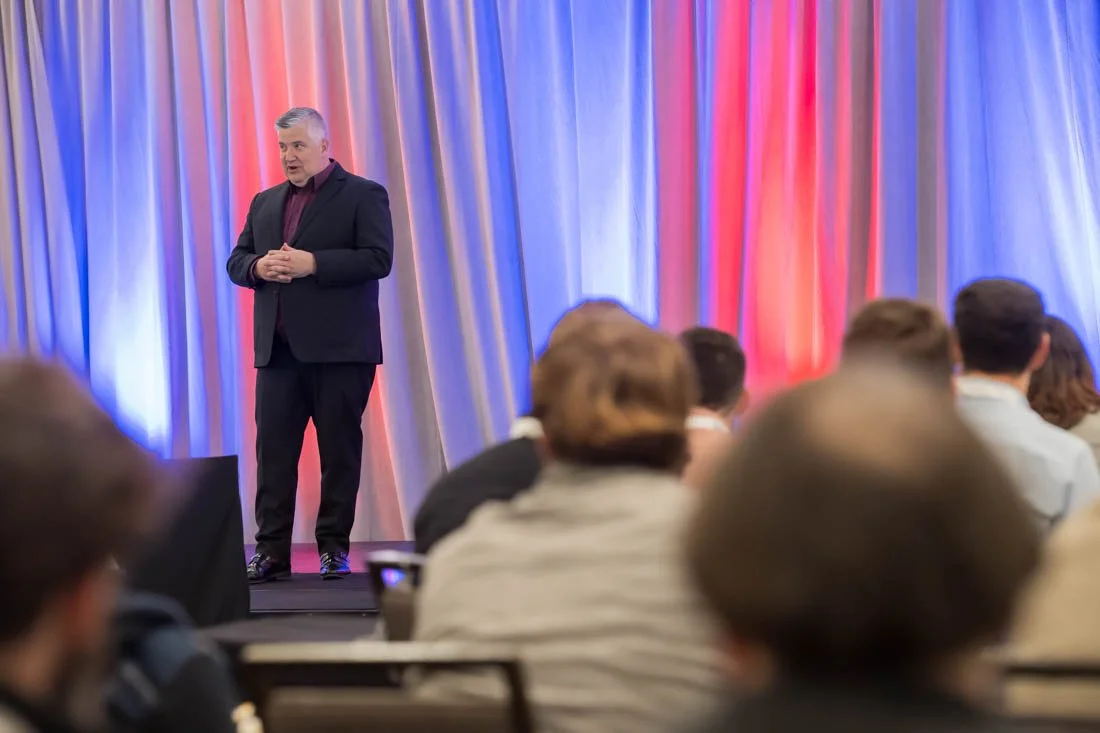
He had a pile of slick photos, no doubt about it.
The sticking point was that almost every good one had him standing on a stage.
The business he's focused on building now starts the moment he steps off it.
He's moving into consulting work with leadership teams, helping executives communicate better with each other. That work happens in conference rooms, around tables, in long sessions with people and a whiteboard.
And none of that currently exists anywhere in his photo library.
His visuals position him as a speaker who is an expert, not an expert who speaks.
That gap has nothing to do with bad photography. Those pictures did - and still do - their job, and do it well. It just means the business is evolving faster than the visual evidence that represents it.
This happens to everybody who keeps moving. You refine the offer, add something new to what's for sale, raise your rates, start landing different kinds of clients, and are invited into rooms you weren't leading two years ago.
As a result, you want more conversations on the calendar about the new thing.
So you take a peek at the website, the LinkedIn profile, the speaker page, the proposal, and whatever else is starting conversations on your behalf.
That's when you realize the first impression you're making points the right people toward an outdated version of you.
The person evaluating you doesn't know the website visually is 6 months behind the business. They don't know the service page predates the new offer. They can only evaluate what's in front of them.
The first impression gets messier when the copy already tells the new story and the photographs are still pointing towards the old one.
Now, there's real friction at the exact moment someone is deciding whether it’s worth their while to click your call link.
This is usually where the "I need new photos" alarm bell goes off.
Before anybody starts booking anything, one question needs an answer:
Are these the wrong photographs, or are they simply no longer the right photographs to lead with?
Those are two very different problems.
Most of the time, it's the second one. A photograph doesn't become worthless because the business changed. Its role in your visual presence changes.
What used to represent who you are right now becomes evidence of where you've been, and that evidence still carries weight.
It shows you've been doing this for a minute. And a track record matters more than it used to, now that some wannabe can vibe-code a landing page over a weekend, drop in a few AI-generated images, and call themselves an expert by Monday morning.
A real body of visual evidence lands differently with someone who has only scanned your presence to get a read on you.
But history can't hold the frontlines forever.
When you're selling something different today and taking the business somewhere new tomorrow, the images need to represent that.
That’s why this stops being a photography question and becomes a business question.
What's for sale now? How does the work actually happen? In person, on a screen, on the phone, or some combination? Is it one-to-one, one-to-a-small-group, one-to-many?
Then go deeper.
Are whiteboards, slides, flip charts, Post-its, handouts, workbooks, tools, environments, or other people part of the experience? Long story short, what does it look and feel like when somebody pays you money to help them?
With that context, the library can be evaluated with a more nuanced eye. Can what you already own represent the business you're running today?
Sometimes it can. There may be images sitting in the archive that matter more now than they did the day they were created and delivered to you. And sometimes, the review exposes that parts of the current business don't exist visually at all.
That last one is where a branding session becomes a business decision instead of picture day.
For the guy with the stage photos, the answer showed up about 10 minutes into the conversation. He didn't own a single image of himself working with a leadership team, because that work was newer than every photograph he had.
That's a reason to add to the library. Not a fresher headshot because he got bored looking at it.
It’s about filling in the missing visual evidence, so the next right person understands what's actually for sale, visualizes what it’s like to work with you, and can clearly see that the visual signal matches the level of conversation you're asking them to have.
The photos that got you here still matter. They're part of the body of work.
But if the business has evolved, the frontlines of your visual presence need to move with it.
If something about the way you're presenting yourself feels behind where the business is going, let's start with a conversation.
We can look at what you have, what you're selling now, what's missing, and whether creating something new together actually makes sense.