
The Scan That Decides Before You Get Heard

Think about the last time you needed something handled right away.
You searched, opened a browser tab on a few options, didn’t read every word.
You scanned until you felt a yes, a no, or a “ehh, this isn’t it.” And, within seconds, you made a snap decision to set up a consultation call with one of the options.
For example:
Your HVAC unit breaks down in the middle of July. It’s midday.
You don’t want your family sleeping in a sweatbox all night. You frantically run a Perplexity search for HVAC specialists in your area. Three options appear, so you open three tabs.
In the first tab, the website looks like it hasn’t been updated since 2010. The photos feel like template filler. There’s a photo of your HVAC unit in the middle of the page, sure, but the overall look feels dated and forgotten.
Major red flag - so, you close the tab and move on.
In the second tab, the website feels like it was updated in this decade - good start, right?
As you scan down the layout, you are met with stock images of happy families enjoying dinners in bright living rooms..and no one is sweating profusely.
The HVAC images are here, as well, but they are pristine product shots. You keep the tab open longer than the first, but you don’t feel compelled to call the number at the top of the page just yet. You move on to the final option.
Number three is different.
You see a support team working on a broken unit in a residential backyard. Photos of the service truck looks organized and maintained. You catch images of the team with real context in real spaces. There’s a client interaction within a home.
And, at the bottom of the homepage, you see a message from the owner, with their face and their team in a photo taken in their headquarters.
You don’t need to run through their entire service menu. You already have enough visual signal to decide who feels like a safe bet to call for more information.
That is the beginning of the buying decision - and it happens in seconds. Your presence passes or fails before anyone reads your bio, studies your work, or asks what you charge.
In the Evaluation Moment, prospects are looking for visual proxies of value, not entire life stories. That deeper analysis happens later in the buying journey.
They’re trying to answer one question fast:
Can I trust this person is reliable, competent, and actually ready to deliver what they’re claiming?
They do it through visuals because humans make meaning through images. Words take time. Visual scans do not.
Visual proxies of value
A visual proxy of value is a cue that lets a decision maker shortcut the uncertainty. It helps them feel that you belong at the level you say you operate at. It helps them feel they’re not wasting their time.
When your visuals act as good proxies, the buyer keeps moving forward.
When they’re weak, the buyer keeps looking elsewhere.
In most cases, they don’t even realize they made the decision, they just shift.
This is where your three visual layers come in. Each one functions like a separate piece of the proxy test.
Core Assets: legitimacy in the first glance

Core Assets are what the decision maker sees first, before they decide whether to trust you enough to keep looking. This is the layer that answers the quiet question in the background: “Do they belong at the level they say they operate at?”
This is where your presence has to feel current and coherent.
No stock photos, no AI-generated headshots - just you. Unapologetically and real.
If your Core Assets look generic, dated, or disconnected from where your business is now, the buyer starts filling in the gaps with doubt. They don’t write it down. They don’t send a direct message to their colleagues about it. They just address the red flag by looking or another option instantly.
Core Assets create a kind of visual permission. They make it easier for the buyer to treat you as a legitimate option because you’re presenting yourself as a genuine human being.
If they don’t, you get pushed, at best, to the bottom of the pile, and, at worst, completely forgotten.
Visual Evidence: delivery you can trust

Visual Evidence answers a different question than legitimacy. It asks whether you can actually deliver what you say you deliver.
These images are where people stop wondering and start believing. They want to see you doing the work, in context. They want to see the process, the thinking, the leadership, and the moment where your expertise becomes tangible.
Visual Evidence makes your claims feel earned and real.
A lot of experts skip this step.
They have polished portraits and nice branding shots, but nothing that shows the work itself. No process. No collaboration. No “this is what it looks like when you’re in the room with me.”
When Visual Evidence is missing, the buyer has to fill in the gaps themselves. They can’t tell if you deliver when the lights are on, so they hesitate. That hesitation becomes friction in the buying process.
Visual Evidence reduces uncertainty and makes the conversation easier to start. That’s why it matters so much.
Missing Details: depth that earns the next step
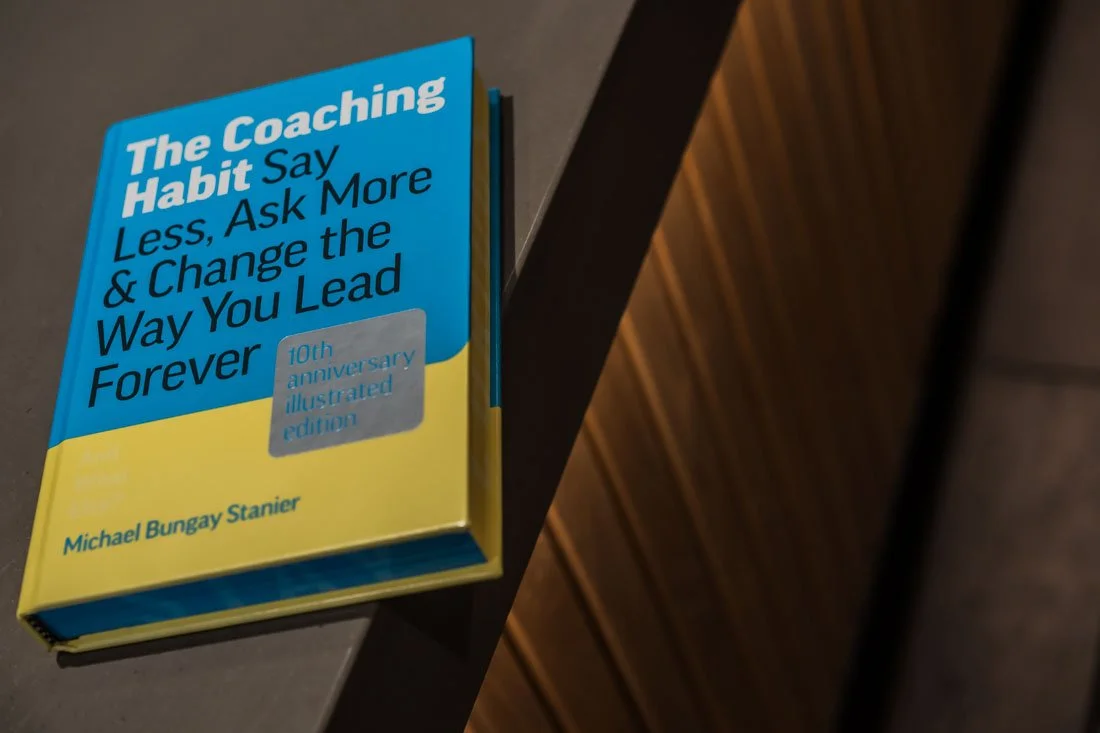
Missing Details are what make your visual story feel complete enough to justify deeper attention.
This layer answers the question: “Is there enough specificity here to make this worth my time?” It’s not about adding more photos. It’s about adding the right kind of proof, and the right kind of visual texture to paint a broader, more comprehensive picture.
Professional signals help. Books. Awards. Other asepcts of your intellectual property. Branded materials that signal value and attention to detail. Behind-the-scenes moments that prove your expertise is real and ongoing.
These details tell the buyer you’re the genuine article, not someone who slapped together a website through vibe coding in a day-long session in the hopes that they could open up a new revenue stream.
Personal texture matters too, as long as it stays purposeful.
Hobbies, community involvement, family - a deeper glimpse of how you live and work. Enough to make you memorable without turning your presence into oversharing.
When Missing Details are in place, the buyer’s scan ends with confidence.
They feel like they’ve seen what they needed to see. They’re more likely to invest in the next step, which is to get you on a call to dive deeper into determining whether or not you’re the right fit for them.
The scan is yours to engineer, not yours to guess
The buying decision is built on risk reduction, especially at the beginning on the journey. Your visuals are the mechanism that reduces it fast.
You can’t control how the decision maker scans your website, LinkedIn page or social profiles. You can’t control their mood or their timing.
But you can control the proxies that reinforce your expertise, authority and humanity.
Core Assets make legitimacy easier. Visual Evidence makes delivery believable. Missing Details make the choice feel complete.
When those three layers are aligned, the buyer doesn’t have to work to trust you. They can trust you quickly, and that changes what happens next.
If you want a clear read on what your visuals are signaling right now, start with the 10-Second Visual Scan Audit: johndemato.com/newsletter-signup