
The $720,000 Blind Spot You Didn't Know You Had

I was sitting with a business coach colleague the other day, and our conversation veered into the nitty-gritty numbers of her business.
Aside from being a magical human being, she’s world-class at what she does, working with mid-market CEOs and leadership teams. The results she delivers are the kind people write books about.
But as we looked at her pipeline, the math wasn’t mathing.
I asked her, "What’s a single contract worth to you?" She responded, "$10,000 a month for a six-month engagement."
Then I asked about her capacity. She can handle five clients every six months. Right now, she’s consistently sitting at three.
I leaned in and said, "Think about that for a second. That means every six months, there is $120,000 sitting on the table that belongs to you, but it’s being put in other experts’ pockets."
Next, I wanted to know how long she’s been working under capacity. She told me it’s been a consistent issue for the three years she's been in business.
So, her $120,000 problem is actually a $720,000 problem… and counting.
"Damn," I said. "That sounds expensive, don’t you think?"
She got quiet. It wasn't a "marketing hiccup" anymore. It was a massive reservoir of growth she hadn't tapped into.
And while she had a high closing rate once she actually got prospects on the phone, the challenge was her ability to actually book those calls in the first place.
From my perspective, the answer wasn't in her methodology, her track record, or even her sales process. It was in her signaling.
I told her: "You’re paying an Invisibility Tax you didn’t even know existed, but here’s the good news: it’s the easiest fix in your entire process."
First Impression Validation
Now, I’m not going to sit here and tell you that 100% of that lost revenue is because of crappy photos. That would be a lie.
Business is complex, and there are a dozen variables that go into a CEO’s decision to trust you enough to pay you money to help solve their challenges.
In the high-ticket world, expertise is the baseline.
But in the blink of an eye, the moment a CEO lands on your LinkedIn profile, a piece of online content, or your website., their brain is looking for validation.
They’re asking: "Is this an expert who can lead me, or a vendor I have to babysit every day?"
Imagine two experts.
Their expertise and track record are comparable. The investment in either one’s services is nearly identical. But when the CEO goes to do their due diligence online, the difference between the two smacks that decision-maker in the face.
One website is filled with stock photos of “boardroom meetings,” generic graphics that showcase their frameworks, and a couple of AI-generated images that feel completely artificial and out of place. Sure, the images check the boxes, but he’s hiding, nowhere to be found on the entire site - except for one, clearly outdated headshot on the About page.
The site, overall, feels like it was put together like a templated business card just to have something to hand out at a networking meeting.
(By the way, I’m describing my colleagues’ website in this example).
And then, there’s the other expert.
You see her energy in a variety of headshots and portraits scattered throughout the pages. You see her in the act of solving problems in person at a co-working space, on a stage, on a laptop screen in a Zoom room, and in a boardroom. You see the details of her process, like banging away on ideas on a laptop with a black book filled with notes sitting nearby.
You feel like you know her as a human being. You sense the amount of intention and detail she put into clearly painting the picture of who she is and how she helps others. You can see, not just read, why and how she solves problems for the people she serves.
In your opinion, who do you think is going to get the discovery call booked?
When expertise is equal, it is my belief that visual signals are the tie-breaker. It’s the difference between turning a "maybe" into a "yes."
Visual Authority Infrastructure
The most exciting part of this realization is that the solution isn't about "vanity" or "looking pretty." It’s about building Visual Authority Infrastructure.
It’s about shoring up your promotional approach so it finally supports the weight of your business goals and befits your level of expertise.
To close that $720,000 gap for my colleague, we discussed the three specific categories of photos she needs to sprinkle across her entire online presence:
1. Core Assets (The Essence)



These are the headshots, portraits where you’re looking directly into the camera. It’s a deliberate, visual representation of your personality and how you want to be perceived by your audience of potential clients. You exhibit this through your facial expressions, body language, outfits you wear, and the locations in which they’re photographed.
These aren't just "headshots," they’re perception anchors. They ensure that your first impression is a true reflection of the human being behind the superhero powers you possess to help people get past what’s holding them back.
2. Visual Evidence (Showing How the Sausage is Made)


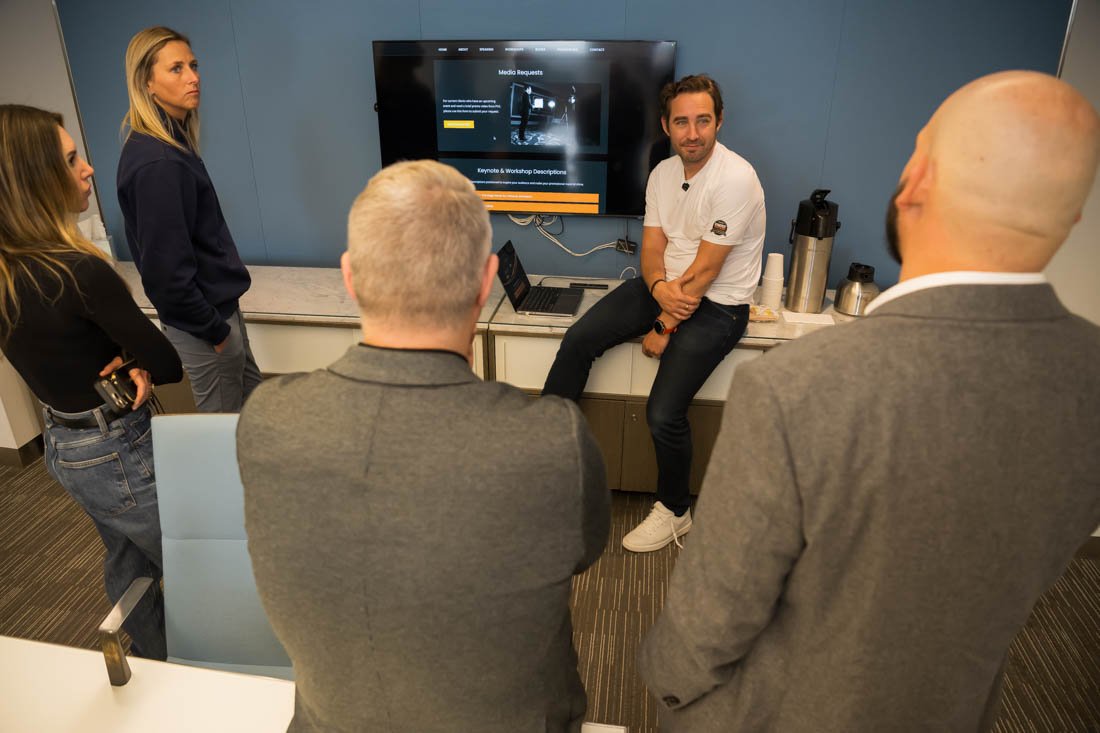
This is where you stop telling people you’re an expert and start showing it. We need to see you caught in the act of serving your people.
This means capturing you in the boardroom, on the stage, on screens, in online courses, or across the table, knee-deep in a one-on-one strategy session with a client. It’s the visual proof that you’ve done this before, recently, and for people just like them.
This layer of evidence handles the prove it objection before it’s ever discussed.
3. Missing Details (The "Yes, And")
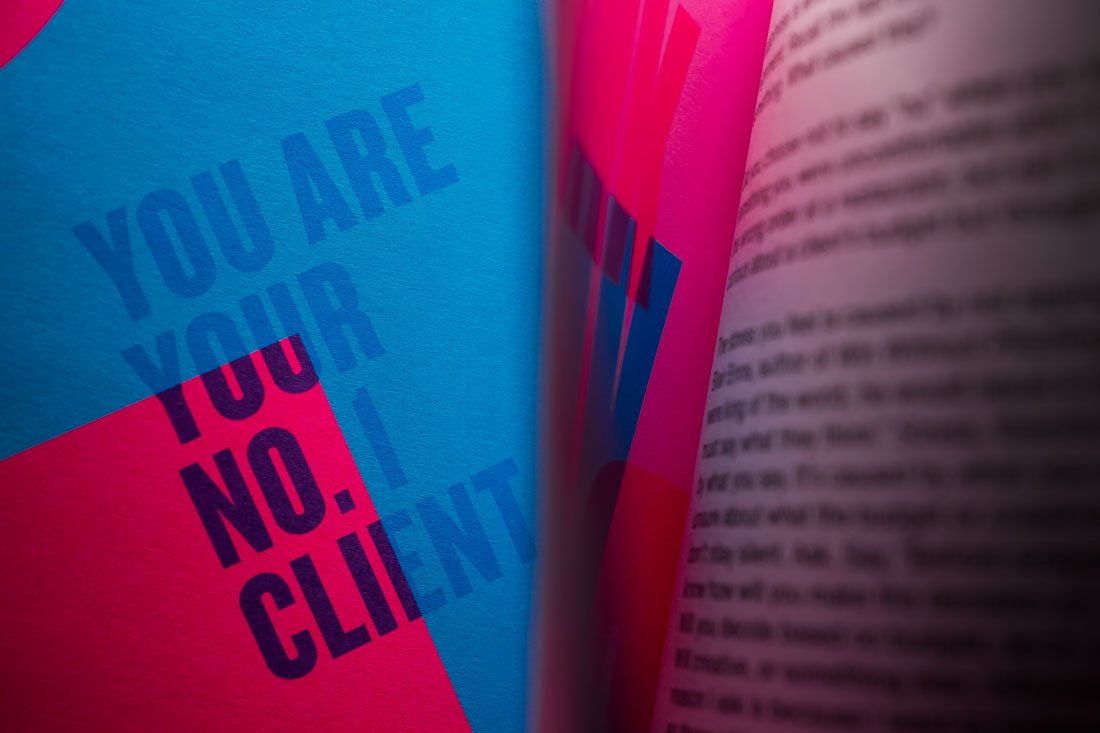


These are the professional signals and personal paint a full-scope picture of your business and brand.
The "Yes" is the professional signal: the books you’ve written, the awards on your wall, the specific tools of your trade. The "And" are the personal touches: the morning ritual, the travel chaos, the life you live outside of your work.
These details create the connective tissue that inspires a CEO to say, "I can relate to this person see myself working with them." They are the trust signals that AI-generated “perfection” or some stock photo that’s used by 87 other experts can never replicate.
Aligning Your Perception with Your Impact
You’ve already done the hard work.
You’ve built the expertise, delivered the results, and created a track record of adding massive value to those you serve. Now, you have the opportunity to make that impact visible to the people who need it most.
Think about the scale of a Founder or CEO. We aren't just talking about one or two coaching contracts. We’re talking about:
The $500k Partnership that stalls because your digital presence doesn't signal "Market Leader."
The High-Performing Talent who chooses a competitor because they can't "see" your leadership culture.
The Seven-Figure Investment that hinges on the confidence you project in the blink of an eye.
How much growth is currently "hidden" in your business? One contract? Five? Ten?
If a single engagement is worth $10,000 a month, and you’re missing just four of those a year, that’s a $240,000 mistake. If you’re a Founder looking to scale, that number can easily climb into the millions.
Regardless of the dollar amount, aligning your visuals with your value isn't a nice-to-have marketing project. It’s a critical piece of business infrastructure that helps to shore up your authority and capture the revenue you’ve already earned.
Architecting Your Authority
If you’re ready to stop being the best-kept secret in your industry and actually align your visuals with your impact, let’s look at your visual storytelling strategy. We’ll identify exactly where the gaps are and how to close them.
Write the word "TAX" in the comment section and let’s start the conversation.