

Don't Shoot From Across The Street
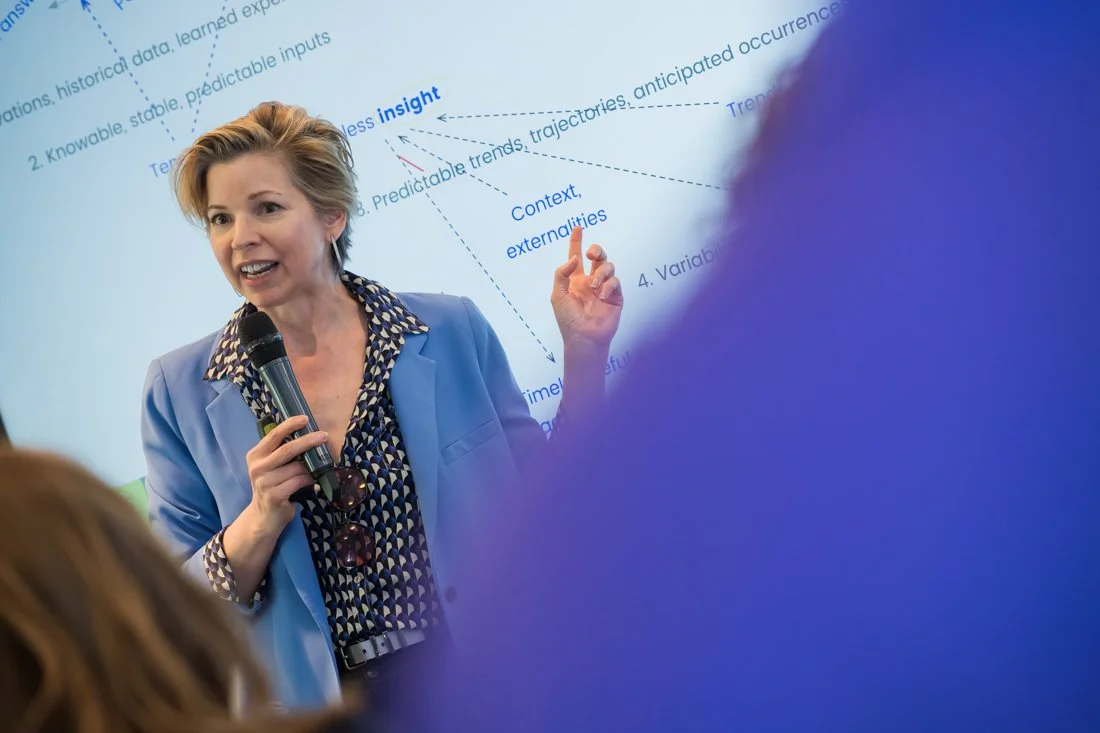
Let’s say you’re watching a movie - specifically a romantic comedy since, you know, those are my jam :)
Two characters have been dancing around their feelings for each other through an entire movie. She's a small-town diner owner who's given up on love. He's the traveling photographer - see what I did there? - who's never stayed anywhere long enough to matter.
For two hours, we've watched stolen glances, interrupted conversations, fumbling and bumbling moments where they almost said what they really meant.
Finally, at 2AM in her empty diner, surrounded by dirty dishes, empty coffee cups and the weight of everything unspoken, she looks at him and says, "I think I've been waiting my whole life for someone like you." The lighting is spotlit on the two of them in the kitchen. The music swells.
This is the payoff moment we've all been waiting for.
And then... the camera pulls back.
WAY back.
Outside the diner, shooting through the window from across the street. You can barely make out two tiny faces inside having their first kiss.
No facial expressions. No connection. The magic moment was barely visible through the blinds.
You’d be annoyed, wouldn’t you? You’d feel like you were missing out, right?
Well, this is exactly what many experts and business leaders do with their visual content. When your brand needs to connect with your audience most, you're shooting from across the street.
Why We Need the Close-Up
Here's what film directors understand that most business owners miss: People connect with faces, not landscapes. The close-up isn't just a camera technique—it's an emotional technology that creates intimacy and trust.
When a director wants you to feel something, they move the camera in. They show you the slight curl in someone's lip, the way their eyes squint when they smile, the moment of recognition that changes everything. These micro-expressions carry the entire emotional weight of the story.
Your business content works the same way.
People don't hire logos or company names. They hire people. They buy from people they trust, people they can see themselves working with, people who feel real.
But most of the time, you're giving them the wide shot.
Generic team photos where everyone looks like ants. Event photography where you're barely recognizable in a crowd. Smartphone snapshots from networking events where your face takes up roughly 2% of the frame.
The Psychology of Recognition and Connection
Dr. Albert Mehrabian's research on communication shows that 55% of communication is body language, 38% is tone of voice, and only 7% is actual words.
But here's what's crucial for your visual content: most of that body language information is contained in facial expressions and micro-movements that are only visible in close-up photos.
When someone sees a wide shot of you at a conference, they're getting breadcrumbs of visual information they need to form a real impression. They can see that you exist, that you were in a room with other people - that part is good. There is definite credibility building happening.
But they can't see the confidence in your expression, the genuine engagement in your eyes, or the competence conveyed by how you carry yourself in conversation.
It's like trying to judge someone's character by looking at them through binoculars from across a football field. The information just isn't there.
Paul Ekman's work on facial expressions reveals that humans can detect and process micro-expressions in as little as 1/25th of a second.
These split-second facial cues communicate trustworthiness, competence, warmth, and authority—all the qualities that determine whether someone wants to work with you - or believe in the promise that you’re claiming.
But only if they can actually see your face.
What Happens When You Stay Wide
When your visual content consistently keeps people at arm's length, several things happen, and none of them help your business.
First, you become forgettable.
There's nothing distinctly "you" about a distant shot of someone who could be anyone. Your audience scrolls past without forming any emotional connection or memorable impression. You're not building recognition; you're giving people a reason to overlook you.
Second, you miss the opportunity to convey competence and authority.
The subtle confidence that comes through in a well-composed close-up—the direct eye contact, the relaxed but engaged expression, the genuine presence—none of that translates when you're a small figure in a large frame.
Third, you create distance when you need connection.
People buy from people they trust, and trust requires a sense of relationship. It's nearly impossible to build that relationship when your audience has never really "met" you visually.
Consider two LinkedIn profiles: one featuring a tight, well-composed headshot where you can see the person's subtleties in their eye, eyebrows and mouth, their genuine expression, versus another with a wide shot taken in the back of a boardroom where the person is barely identifiable among the tens of other people in the space.
Which one invites connection? Which one inspires you to scroll down and read their About summary to learn more? Which one suggests someone worth having a conversation with?
The Close-Up Strategy for Business
So how do you use the power of the close-up to build genuine connection with your audience?

In your headshots, the frame should be tight enough that people feel like they're having a conversation with you, not observing you from across a room. Direct eye contact with the camera creates the psychological effect of direct eye contact with each person viewing the image. This isn't vanity—it's strategy.

In your content creation, look for opportunities to bring the camera in. Instead of the wide shot of you presenting to a room, capture the moment of connection with an individual audience member. Instead of the distant view of your team brainstorming, show the focused expression of someone working through a complex problem.

During events and networking, be intentional about getting close-up shots. That smartphone photo from 15 feet away isn't doing you any favors. Work with photographers who understand that your face is your brand's most valuable visual asset.
In video content, remember that the close-up is your most powerful tool for building trust and authority. The talking head shot isn't boring—it's intimate. It's the visual equivalent of a one-on-one conversation.
The Compound Effect of Connecting with Close-ups
When you consistently use close-ups strategically, something interesting happens.
People begin to feel like they know you before they meet you. They recognize you at events because they've seen your face clearly in your content. They trust you more quickly in sales conversations because the relationship has already been established through their connection to your story visually.
Your team photos become more engaging now because people can actually see the individuals who make up your company in other contexts.
Your speaking photos carry more weight when the audience can see your passion and expertise in your expression.
Your casual content feels more genuine because people can read the true emotion written on your face.
Make no mistake, this isn't about vanity or ego or racking up extra engagement numbers online.
It's about the fundamental human need for connection in business relationships. In a world where much of our interaction happens through screens, the close-up becomes your primary tool for creating the intimacy that drives trust, recognition, and ultimately, business relationships.
Don't Shoot From Across the Street
When someone encounters your visual content, are they getting the close-up that builds connection, or are you making them watch your most important moments from across the street through a diner window?
Are your photos giving people enough visual information to form a real impression of who you are, or are you hiding behind the comfort of distance when connection matters most?
When your audience is ready to connect, to trust, to buy, make sure they can see your face. Your face is your brand's most powerful asset for building trust and connection. Use it strategically. Give your audience the close-up they need to fall in love with what you do and how you can help them.
If you're ready to create visual content that builds genuine relationships and drives business results, let's talk about putting your best face forward.