
10 Critical Questions to Transform Your Expert Brand for 2026

Recently, I found myself tucked away at a dinner. Not just any dinner.
This was a table buzzing with some seriously successful founders and expert business owners. We’re talking leaders running multi-million-dollar ventures, spanning every industry imaginable.
They’re obsessed with growth, always pushing for more. For better. My kind of people 😀
The CEO to my right? A visionary. Built an empire. He’d caught a glimpse of what I do earlier that day during the mastermind, and now he was leaning in. Deeply curious. Asking about how strategic visual storytelling could actually amplify his reach and market traction.
Yet, what struck me was his admission: “I’ve never even considered visuals as a strategic lever for growth.” Not once. Even for him.
And he wasn’t alone. I saw that same realization dawn on others around the table. Brilliant minds. But they were operating at peak performance, unknowingly leaving significant market share and influence just… sitting there. Untapped.
Sound familiar?
This opportunity isn’t about just “getting new, pretty photos.” This is about taking a practical and honest look at where your visual narrative currently stands versus where it needs to be to capture the opportunities heading into 2026.
If you’re ready to stop guessing and start ensuring your brand’s visual story isn’t just “good enough,” but aggressively compelling—actively working for you 24/7—then it’s time.
Ask yourself these 10 critical questions:
1. Do your visuals truly invite your audience into a ‘front-row seat’ experience of your expertise?
Your visuals need to be immersive, actively engage your audience, and make them feel directly connected to your insights, process, and thought leadership.
For instance, if you're a leadership team trainer, is your online presence filled with static headshots or generic photos of you standing at a podium?

If there are no visuals of you actively facilitating a dynamic workshop, coaching a team through a communication exercise, capturing the 'aha!' moments on participants' faces, or demonstrating your unique methodology in action, your audience gets the "look" but not the "feel" of your actual expertise.
They’re missing that front-row seat to the transformative value you deliver.
2. Consider your core assets—your headshots, your wider portraits. Are these crafted to instantly convey your leadership, approachability, and essence across all platforms?
This is your visual handshake. They’re not just about looking “nice”; they’re about making an immediate, specific, and impactful statement about who you are as a leader, who you are and what you stand for, consistently across your website, LinkedIn, and media kits.

Picture a tech CEO: their company website might be sharp and modern, but if their LinkedIn profile picture is an awkward crop from a group photo (who’s hand is sitting on your left shoulder - that looks so weird!), or their speaker kit uses a dated image with a generic background, that’s a disconnect.
It tampers a consistent message of innovation and leadership, subtly suggesting a lack of attention to their own public persona.
3. Do your visuals provide clear cues that allow your ideal clients to easily visualize themselves experiencing tangible success by partnering with you?
Your imagery needs to be aspirational for your clients, not just reflective of you. It should subtly paint a picture of their future. A future where your solution has transformed their reality.
This taps into their desires and pre-sells the outcome, showing them not just what you do, but what they gain.

Take a business consultant. Their current visuals might show them looking confident and successful, sure.
But if there are no images that subtly imply client transformation—no visuals of collaborative mastermind sessions, celebration moments, or client testimonials subtly integrated into the background—the audience struggles to imagine their own journey with that consultant.
4. Let’s talk process: Do your visuals showcase your entire value delivery process, wrapped in an aesthetic that impeccably complements the prestigious way you wish to be perceived by your most discerning clients?
Your visual story should not just highlight the result, but crucially, the journey.
Examine whether your imagery illustrates your unique methodology, step-by-step, with a consistent, premium aesthetic that aligns with your brand’s desired perception. It’s about communicating attention to detail and high standards visually, making your process a key part of your value proposition.

For example, a successful financial advisor whose visuals are clean and professional, focusing solely on smiling photos and stock market graphs. What’s missing?
Anything that visually describes their proprietary step-by-step financial planning system—no visuals of their custom intake forms, a generalized client dashboard, or an intimate one-on-one consultation setting, and their unique, reassuring client journey. That’s a huge waste of an opportunity to stand out.
5. Does your visual storytelling truly mirror the premium products and transformative services displayed in your metaphorical ‘storefront window,’ or is there a noticeable mismatch that diminishes perceived value?
Your visuals are your brand’s first impression, operating just like a storefront window.
Your imagery needs to accurately reflect the quality, sophistication, and effectiveness of your actual offerings, or it creates a disconnect that undermines credibility before you even have a chance to speak.
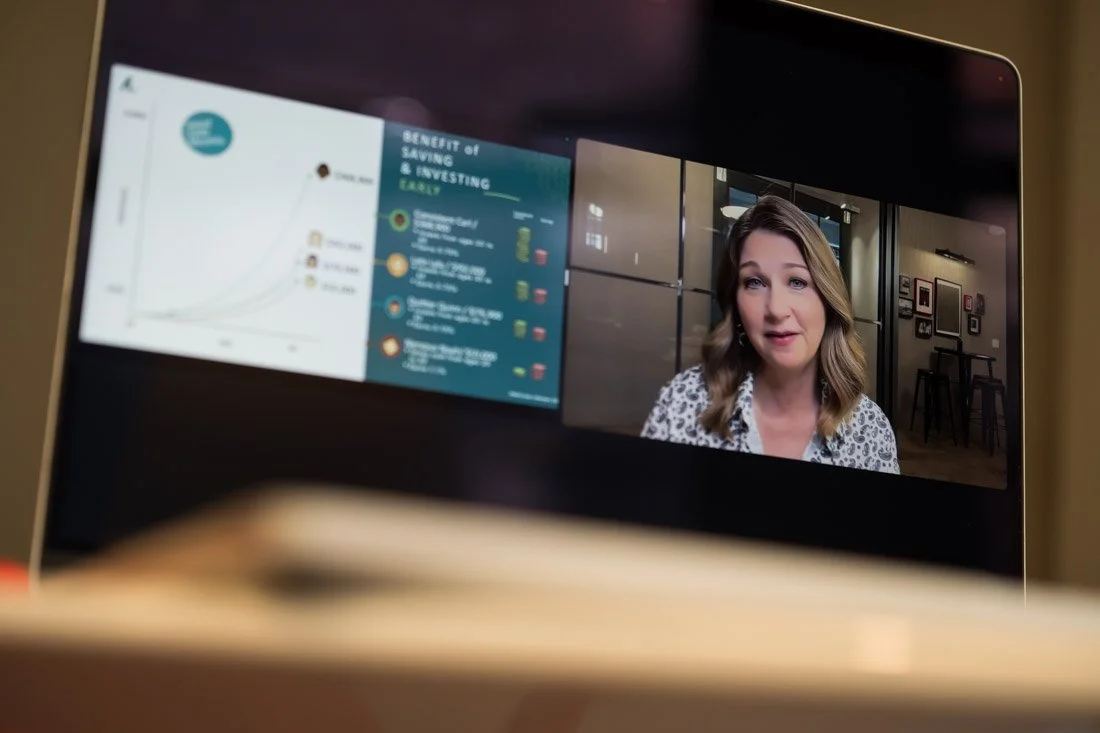
I’ve seen CEOs of luxury brand consultancies, who speak at high-end conferences and deliver unparalleled service. Yet, their website visuals feature poorly lit office photos and a few informal candid shots. That’s a huge disconnect.
Their ‘storefront window’ appears less premium than the ‘products’ inside, creating a dissonance that they have to work twice as hard to overcome. Eliminate that friction.
6. Are you still relying on stock photography or generic, low-quality images to represent critical aspects of your brand, especially on social media or in key presentations?
Stock photos, or even old, casual pictures, are visual dead weight, not strategic assets.
This creates an immediate disconnect, implying either your work isn’t unique enough to warrant original imagery, or you lack the investment in your own brand. This subtly torpedoes authority and authenticity, and that puts you in position to blend into the wallpaper, and not stand out.

Think of a highly specialized medical expert who constantly uses generic stock photos of people in lab coats or abstract science graphics in their presentations. While their insights might be groundbreaking, relying on unoriginal imagery leaves them visually bland.
They fail to communicate their unique, cutting-edge approach or personal, empathetic approach, becoming visually indistinguishable from any other general practitioner.
7. Do your visuals offer a genuine, unfiltered glimpse into your unique personality and genuine essence, or do they merely ‘present’ a polished façade that misses the depth of who you truly are?
In an age where folks are thirsty for real, your audience is drawn to connect with the human behind the title.
Do your images reveal your true self—your quirks, your passion, your unique way of being—or if they create a barrier, making you seem unapproachable or artificial.

Consider a highly successful CEO of a thriving enterprise, brilliant and influential, yet also known for being a bit quirky and an uncanny ability to connect with people on a deeply human level.
If his entire visual brand showcases only impeccably tailored suits and serious, 'executive' expressions—every image polished and corporate—it leaves out half the story. The human side truly draws people in, which then sets the table to present him as the competent and brilliant CEO that he is.
8. Are you intentionally and consistently leveraging your smartphone to capture high-quality, authentic, and strategic visuals that reinforce your brand in your day-to-day interactions?
When aware of the opportunity, your smartphone is a powerful, always-on visual asset collector.
But are you actually using it to strategically capture relevant, genuine content - quick insights, behind-the-scenes moments, real-time reactions - that complements your professional imagery? Or are those photos completely missing from your never-ending story?
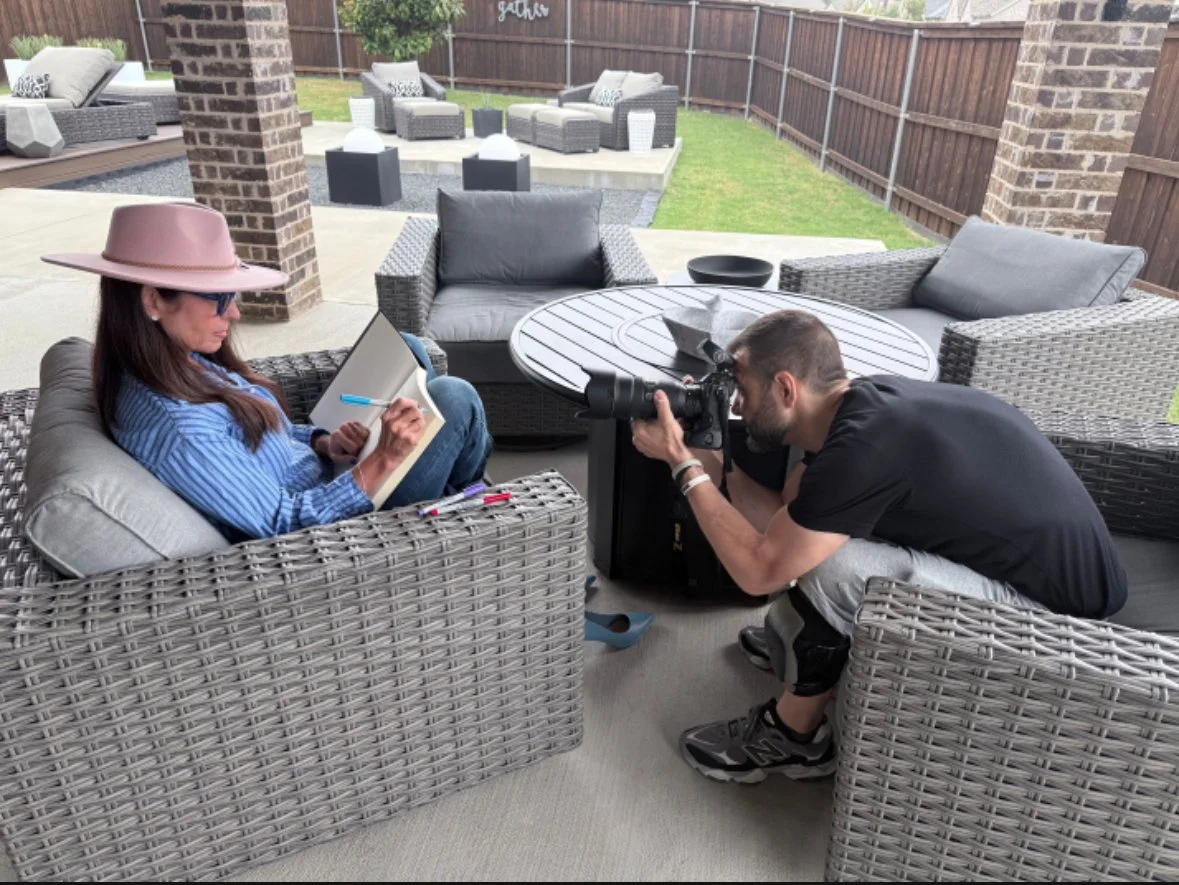
I’ve seen thought leaders who frequently attend industry conferences and meet with high-level colleagues, yet you’d never know it. They’re missing prime opportunities to capture and share spontaneous, genuine visual evidence of their active participation and insights in their field.
9. Do your visuals capture the essential ‘missing details’: the specialized tools of your trade or professional IP signals and the deep expertise evident in your most impactful moments?
The devil is in the details - and it’s not enough to talk about it, you need to show it, too.
Do your photos reveal the nuances, the 'moments within the moments' that serve as powerful visual proof points of your competence, connection, and proprietary value?
Take a thought leader, consultant, or course creator.
While they might have plenty of photos of them speaking or looking professional, are their visual assets diving a level lower to highlight their unique offerings?
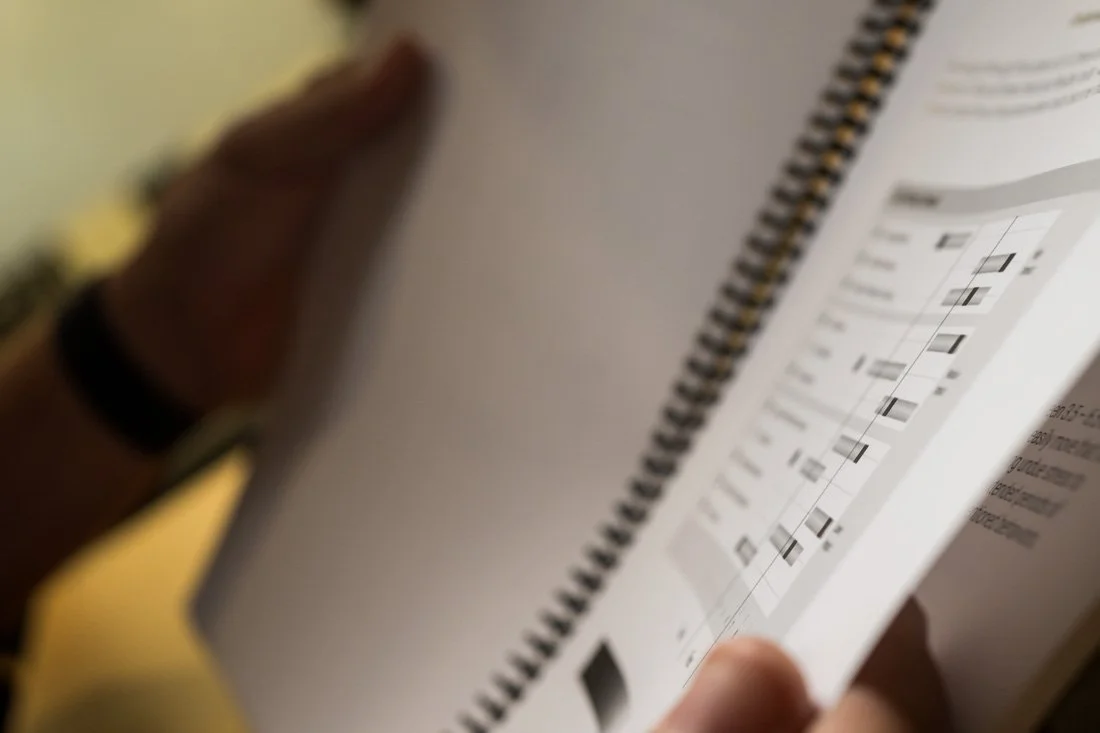
If their visual library lacks close-ups of them presenting their signature frameworks on a tablet, engaging with their bespoke online course material, using custom-designed worksheets, or even subtle imagery of their patented tools or a specific process flow, it misses a huge opportunity.
These 'missing details' are the tangible proof points - the visual evidence - of their impactful IP and unique value in their 'storefront window' that might otherwise be overlooked.
10. Are you genuinely and consistently building your visual presence to establish yourself as the ‘house on the hill’ or are you silently awaiting the wrecking ball?
Your visual brand isn’t static, it’s an evolving asset.

Are you actively investing in and maintaining a dynamic, relevant visual presence that consistently reinforces your top-tier position, or if you’re letting neglect sabotage your long-term relevance and leadership?
Consider a seasoned founder, a revered voice in their industry, nearing the next stage of their company’s lifecycle. Yet, their visual presence hasn’t been updated in five years. While their insights remain profound, their visual “house” still has wood paneling in the living room and that couch in the corner was calling for the dumpster three years ago.
Their perceived innovation and relevance in the eyes of their market are slowly being chipped away at due to a lack of consistent visual refresh and strategic planning.
Don’t let that be you.
Your Visual Story — An Imperative, Not Afterthought.
Building an enduring, influential expert brand in 2026 demands more than just great ideas or a solid product. It demands a visual presence that is as intentionally crafted, compelling, and genuine as your ambition.
These 10 questions aren’t just an audit; they’re a roadmap.
They are designed to expose the gaps, clarify the vision, and empower you to elevate your visual narrative from “good enough” to utterly indispensable.
What gaps did this audit reveal for your brand?
Were there any questions that truly made you stop and think about your visual strategy? Share your insights and a-ha moments in the comments below.